
Table of Contents Introduction:Understanding Flow State:Flow state is associated with several key characteristics:Activating Flow State through Intentional Action and Deliberation:Conclusion: Introduction:Flow state, often described as being “in the zone,” is a mental state where individuals experience heightened focus, productivity, and enjoyment while fully immersed in an activity. From athletes to artists to professionals, tapping into flow state can lead to peak performance and profound fulfillment. But how do we activate this elusive state of mind? In this blog post, we’ll delve into the concept of flow state, explore its benefits, and provide a step-by-step guide on how to enter this optimal state through intentional action and deliberation.Understanding Flow State:Flow state, coined by psychologist Mihaly Csikszentmihalyi, is characterized by a state of complete absorption in an activity, where time seems to fly by and the individual is fully engaged and energized. In this state, distractions fade away, and there’s a seamless merging of action and awareness. It’s a state of effortless effort, where challenges are met with confidence and skill.Flow state is associated with several key characteristics:Intense Focus: The individual experiences laser-like focus on the task at hand, with heightened concentration and clarity of mind. Loss of Self-Consciousness: There’s a sense of being completely absorbed in the activity, with a temporary loss of awareness of oneself and one’s surroundings. Timelessness: Time seems to pass differently in flow state, with individuals often reporting a sense of time distortion, where hours can feel like minutes. Intrinsic Motivation: Flow state is inherently rewarding, with individuals finding deep satisfaction and enjoyment in the process itself, rather than external rewards.Activating Flow State through Intentional Action and Deliberation:Deliberation, or thoughtful consideration, plays a crucial role in activating flow state. Here’s how deliberate actions with clear intentions on the task at hand can be the gateway to flow state: Set Clear Intentions: Before diving into an activity, take a moment to set clear intentions. What do you hope to accomplish? How do you want to feel during the process? Setting intentions helps align your actions with your goals, providing a roadmap for entering flow state. Break Down Tasks: Break down larger tasks into smaller, manageable steps. By breaking tasks into bite-sized chunks, you can focus on one thing at a time, reducing overwhelm and creating a sense of progress. Focus on the Present Moment: Deliberately focus your attention on the present moment. Let go of past regrets and future worries, and immerse yourself fully in the task at hand. Mindfulness practices, such as deep breathing or body scans, can help anchor you in the present moment. Stay Flexible: While deliberate action is important, it’s also essential to stay flexible and adaptable. Flow state is a dynamic process, and being open to adjustments and changes can help maintain momentum and creativity. Monitor Progress: Regularly check in with yourself to monitor your progress and adjust your approach as needed. Are you still aligned with your intentions? Are you making progress toward your goals? Deliberate action involves continuous evaluation and refinement.Conclusion:Flow state offers a pathway to peak performance, creativity, and profound fulfillment. By harnessing intentional action and deliberation, anyone can tap into this optimal state of mind. Whether you’re an athlete, artist, or professional, integrating deliberate actions with clear intentions into your daily routine can help you unlock your full potential and experience the transformative power of flow. So, go ahead, set your intentions, immerse yourself fully, and let the magic of flow state guide you to new heights of achievement and fulfillment.

Trauma Bonding: The Hidden Dynamics of Unhealthy Connections
Table of Contents 1Understanding Trauma Bonding2Mistaking Trauma Bonding for Genuine Connection3The Pitfalls of Oversharing Your Pain Story4Creating False Connections5Breaking Free from Trauma Bonding1. Self-awareness:2. Seek guidance:3. Set boundaries:4. Invest in self-care:5. Build healthy connections:6Conclusion Human connection is a fundamental aspect of our lives, but sometimes, we find ourselves in relationships that are based on trauma bonding rather than genuine connection. Trauma bonding can be insidious, drawing individuals together through shared pain and suffering, often perpetuating unhealed wounds. In this blog post, we will explore what trauma bonding is, how it can be mistaken for genuine connection, and the potential pitfalls of oversharing your pain story.Understanding Trauma BondingTrauma bonding is a psychological phenomenon in which individuals form deep and intense connections as a result of shared traumatic experiences. This connection is not built on trust, shared values, or healthy communication but is instead rooted in the shared pain and chaos that both parties have experienced. It can occur in various relationships, including romantic partnerships, friendships, or even within families. Mistaking Trauma Bonding for Genuine ConnectionOne of the most significant challenges with trauma bonding is that it can easily be mistaken for genuine connection. When people bond over shared trauma, they may initially feel an intense connection because they believe they have found someone who truly understands their pain. However, this connection is often based on mutual suffering rather than mutual growth and support.The Pitfalls of Oversharing Your Pain StoryOversharing your pain story can contribute to trauma bonding by drawing others into your pain without creating healthy boundaries. While sharing your struggles with trusted friends or a therapist can be therapeutic, indiscriminate sharing with new acquaintances or potential partners can create an unhealthy dynamic. It can lead to the other person feeling overwhelmed or responsible for your healing, setting the stage for a codependent relationship. Creating False ConnectionsTrauma bonding creates a false sense of connection because it lacks the essential elements of healthy relationships, such as trust, communication, and shared values. This false connection can be addictive, as individuals may feel a desperate need to stay connected to someone who understands their pain. However, it often perpetuates both parties’ unhealed wounds, keeping them stuck in a cycle of suffering.Breaking Free from Trauma BondingRecognizing trauma bonding is the first step toward breaking free from its grip. To build healthy relationships, it’s essential to differentiate between genuine connections and those formed through shared trauma. Here are some steps to help you break free from trauma bonding:1. Self-awareness:Embrace the power of self-awareness and the courage it takes to acknowledge relationships that may be rooted in shared pain rather than genuine, healthy connection. Take a moment to reflect on your connections, recognizing any such patterns. By acknowledging these dynamics, you pave the way for transformative growth and the possibility of nurturing relationships grounded in authenticity and well-being2. Seek guidance:Engaging with a skilled coach or practitioner is an invaluable step in your journey towards understanding and transforming unhealthy relationship patterns. They can offer guidance and support, aiding in your healing from past trauma while assisting in the creation of new, healthier habits of relating.3. Set boundaries:Develop internal boundaries as a vital aspect of learning healthy connection. Be mindful of what, when, and why you share about your personal experiences, allowing the process to unfold gradually over time, ensuring that you maintain a healthy balance in your relationships. Use internal boundaries to ensure that you are not oversharing your pain story or allowing others to do so.4. Invest in self-care:Prioritize your own healing and well-being by investing in self-care as a means to build a profound relationship with yourself, one where you learn to discern your genuine needs and desires while aligning with your core values. Achieve this by slowing down, tuning in, nurturing self-compassion, and embracing the art of being fully present with yourself.5. Build healthy connections:Focus on nurturing your nervous system to become attuned to the sensations of healthy connections. Cultivate relationships grounded in trust, open communication, aligned values, and shared growth, rather than bonds formed through shared suffering.ConclusionTrauma bonding is a complex and often overlooked aspect of human connection. While it can create a false sense of intimacy, it ultimately perpetuates unhealed wounds and can keep you stuck in a cycle of pain. By recognizing the signs of trauma bonding and actively working to build healthy connections, you can break free from its grip and cultivate relationships that support your growth and well-being. Remember that genuine connection is based on understanding, empathy, trust, and mutual growth, not shared suffering.
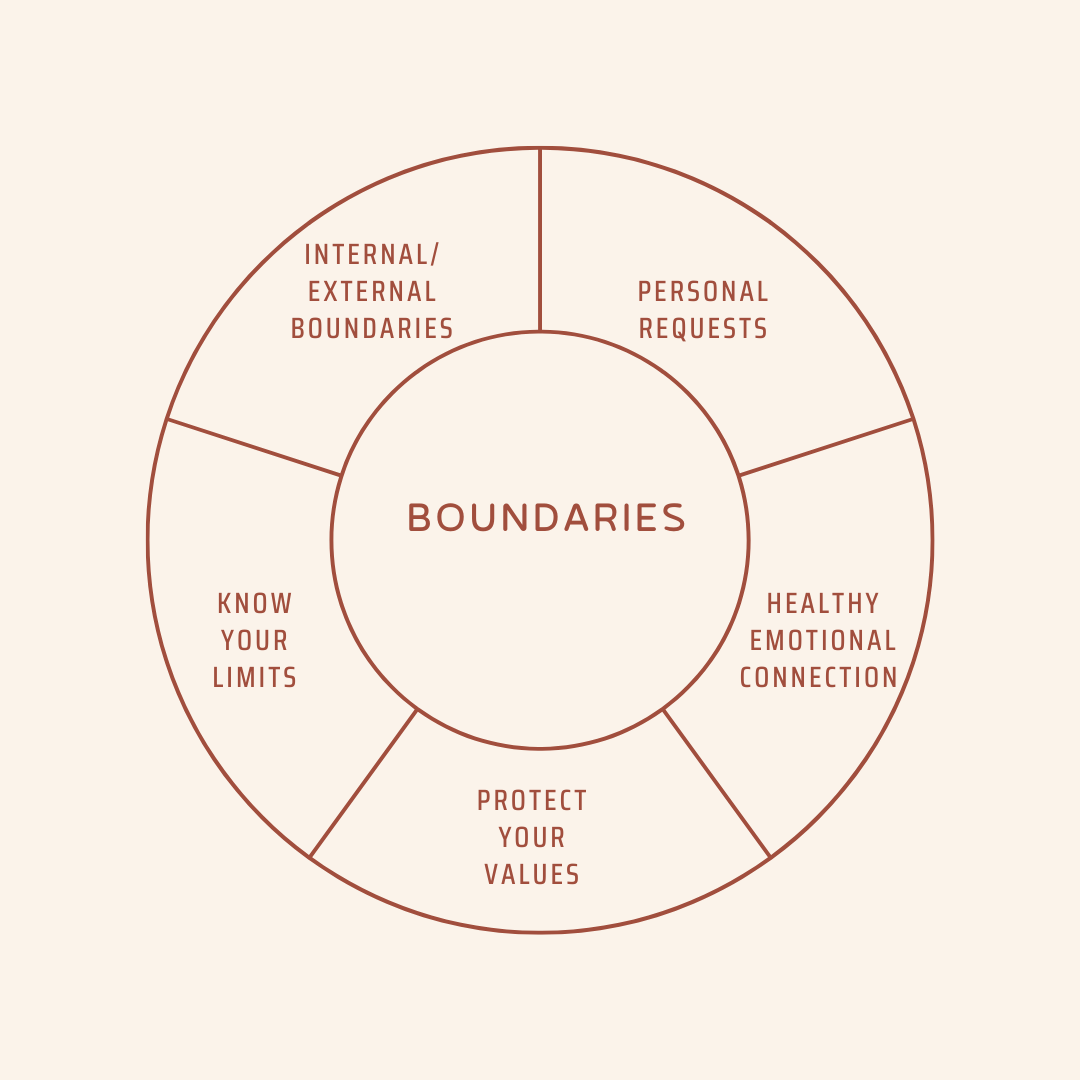
The Pillars of Healthy Boundaries
Do you wish you could be more assertive and set better boundaries in your relationships?Assertiveness is a skill that can be learned and practiced. One way to get to assertiveness is to understand yourself better and learn why boundaries are necessary. Assertiveness is about asking for your needs to be met, making requests, and being able to tell others about who you are. Boundaries are used to protect us, create connections, filter out unwanted energy, and help us learn more about who we are. Do you wonder why it can be difficult to set boundaries? Boundaries are difficult to set when we aren’t clear about what we need. Boundary setting comes easier after we learn more about what safety means, how we protect ourselves, and what our limits are. Let’s talk about limits. I’ll use being introverted as an example to show that once you know more about yourself, you will know what boundaries to set and why. Introverts need more alone time than extroverts, as this helps them to recharge their battery, aka energy. So, for instance, when a friend asks you to go to brunch the morning after you were out until 3 a.m. with friends, you will know that saying yes to brunch is a bad idea and will not feel good to you because you know your limit and you know you have to rest. Saying no is the boundary-setting technique you will learn to protect your energy and take care of yourself. The way to guide yourself to being assertive and setting boundaries is to use information from your primary relationships, your nervous system, the resentments you hold, and your values to create a map of what you need and who you are. Below I have created a list of 5 categories for you to do just that, begin to create a map of yourself, the more self-aware you are the more you will know what boundaries to set and when. Childhood woundsChildhood wounds come from primary relationships, these are your caregivers, parents, and extended family members who modeled relationships when you were small. They were responsible for you when you weren’t able to care for yourself. In childhood, because we rely so heavily on the adults in our lives, we leave ourselves unknowingly open to being emotionally hurt by them. To gather more information about what your childhood wounds are, here are a few questions to ask yourself.Use this as your check-in, where you may have experienced emotional pain in childhood might be where your childhood wounds live: How did you receive love when you were a child, was it less than nurturing? How did your parent(s) connect to you, were they distracted, overbearing, or busy? Did you have to focus more on other people when you were younger, your mother’s emotions, and your sibling’s irritability? Did you feel protected by your parents? Think about your answers, are they attached to any emotional pain or discomfort?Childhood wounds are connected to our safety. When there was less than nurturing parenting in our past we can create adaptive strategies as adults to protect ourselves. These strategies usually show up as behaviors that keep us from being hurt by others. When you can identify ways you felt unsafe when you were a child you can begin to see how you protect yourself today. Do you get defensive when someone is critical because you were often criticized as a child? Do you try to be perfect to avoid being abandoned because one parent took their love away from you when you didn’t do as they wanted you to? There is power in learning how you protect yourself from hurt. This allows you to learn internal boundaries, they generate safety so that you aren’t hurt by others in the same way you were when you were younger. You get to give yourself the safety you didn’t receive instead of spending your energy on protecting yourself from potential pain. How you avoid confrontationTo learn more about how you avoid confrontation is to learn more about your nervous system. When our body senses signs of danger, our nervous system takes over. When we become afraid our bodies react to that fear through an autonomic response. This can be flight, fight, freeze, or fawn. Fawn shows up as people-pleasing, bargaining, deferring, or other befriending behaviors to get through a confrontation. Fight response can be aggressiveness, using anger or frustration to shut down a conversation, or deflecting away from the topic. Flight can look like avoidance, running away from danger, procrastination, putting things off, and hoping they will go away on their own. The freeze response is not knowing what to say, being unable to explain yourself, your mind going blank, and stumbling over your words.Here are some questions for you to consider further: Do you tell someone what they want to hear? Do you agree or just say yes, because it’s easier? Do you find a way out of saying yes or no? Do you have a backup plan for how to get out of unwanted commitments? Does your mind go blank and you don’t know what to say? Do you get irritated or upset quickly? Do you use anger as leverage in conversation?You can design the boundaries needed to manage conflict once you know how your nervous system is activated. For example, if you predominantly find yourself in the fight response; you can take breaks to find your calm and center and then reengage with the conversation. If you find yourself in the freeze response, you can acknowledge you are overwhelmed and breathe deep breaths to give space to the conversation and generate the next thing to say. ResentmentsResentments are the arrows that point us toward our unmet needs. When you create a story in your mind about the reasons someone failed or disappointed you, like “I don’t matter to them,” this is the indicator pointing you to your need. You may have a need to matter, to be seen or feel heard by someone. This need may be