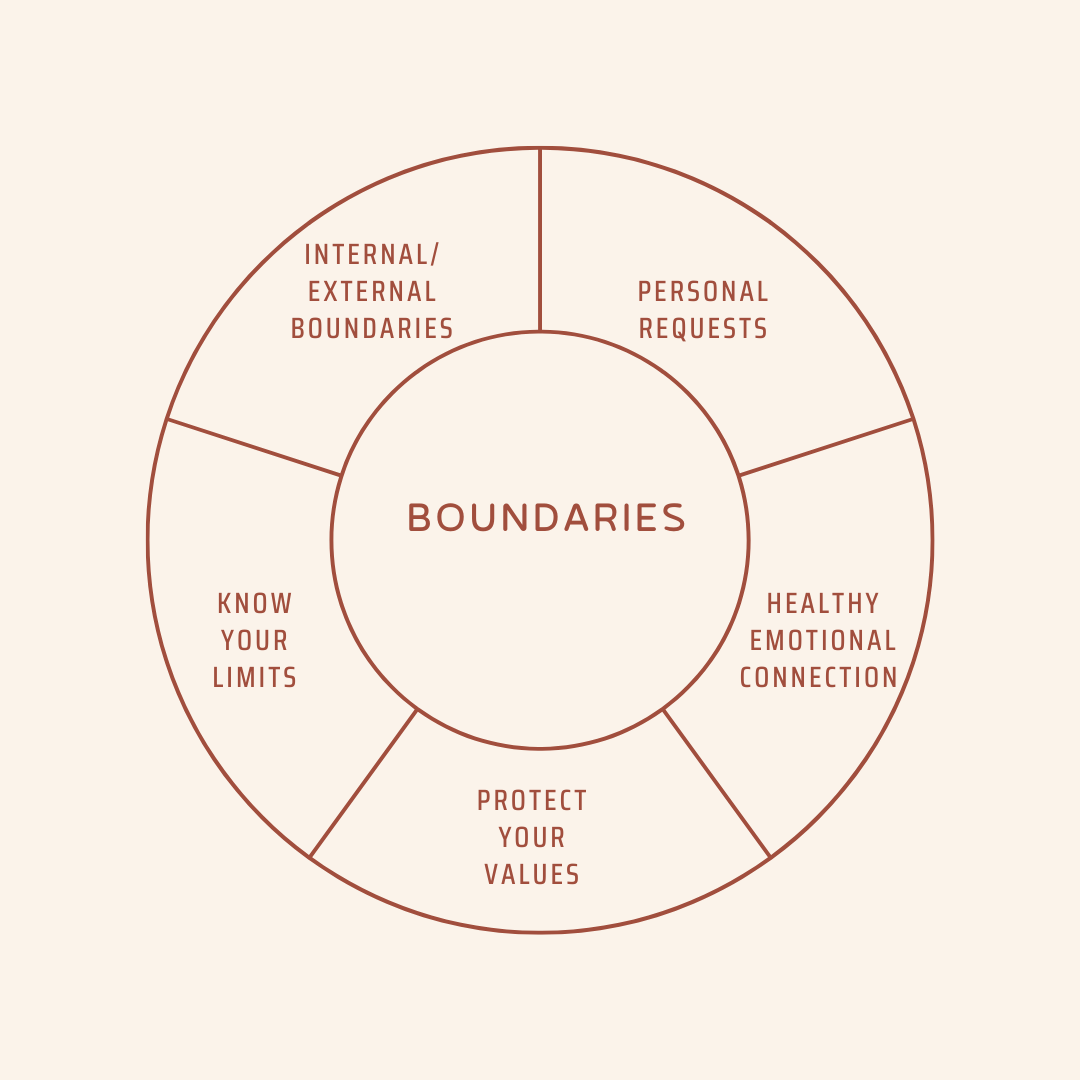
Do you wish you could be more assertive and set better boundaries in your relationships?Assertiveness is a skill that can be learned and practiced. One way to get to assertiveness is to understand yourself better and learn why boundaries are necessary. Assertiveness is about asking for your needs to be met, making requests, and being able to tell others about who you are. Boundaries are used to protect us, create connections, filter out unwanted energy, and help us learn more about who we are. Do you wonder why it can be difficult to set boundaries? Boundaries are difficult to set when we aren’t clear about what we need. Boundary setting comes easier after we learn more about what safety means, how we protect ourselves, and what our limits are. Let’s talk about limits. I’ll use being introverted as an example to show that once you know more about yourself, you will know what boundaries to set and why. Introverts need more alone time than extroverts, as this helps them to recharge their battery, aka energy. So, for instance, when a friend asks you to go to brunch the morning after you were out until 3 a.m. with friends, you will know that saying yes to brunch is a bad idea and will not feel good to you because you know your limit and you know you have to rest. Saying no is the boundary-setting technique you will learn to protect your energy and take care of yourself. The way to guide yourself to being assertive and setting boundaries is to use information from your primary relationships, your nervous system, the resentments you hold, and your values to create a map of what you need and who you are. Below I have created a list of 5 categories for you to do just that, begin to create a map of yourself, the more self-aware you are the more you will know what boundaries to set and when. Childhood woundsChildhood wounds come from primary relationships, these are your caregivers, parents, and extended family members who modeled relationships when you were small. They were responsible for you when you weren’t able to care for yourself. In childhood, because we rely so heavily on the adults in our lives, we leave ourselves unknowingly open to being emotionally hurt by them. To gather more information about what your childhood wounds are, here are a few questions to ask yourself.Use this as your check-in, where you may have experienced emotional pain in childhood might be where your childhood wounds live: How did you receive love when you were a child, was it less than nurturing? How did your parent(s) connect to you, were they distracted, overbearing, or busy? Did you have to focus more on other people when you were younger, your mother’s emotions, and your sibling’s irritability? Did you feel protected by your parents? Think about your answers, are they attached to any emotional pain or discomfort?Childhood wounds are connected to our safety. When there was less than nurturing parenting in our past we can create adaptive strategies as adults to protect ourselves. These strategies usually show up as behaviors that keep us from being hurt by others. When you can identify ways you felt unsafe when you were a child you can begin to see how you protect yourself today. Do you get defensive when someone is critical because you were often criticized as a child? Do you try to be perfect to avoid being abandoned because one parent took their love away from you when you didn’t do as they wanted you to? There is power in learning how you protect yourself from hurt. This allows you to learn internal boundaries, they generate safety so that you aren’t hurt by others in the same way you were when you were younger. You get to give yourself the safety you didn’t receive instead of spending your energy on protecting yourself from potential pain. How you avoid confrontationTo learn more about how you avoid confrontation is to learn more about your nervous system. When our body senses signs of danger, our nervous system takes over. When we become afraid our bodies react to that fear through an autonomic response. This can be flight, fight, freeze, or fawn. Fawn shows up as people-pleasing, bargaining, deferring, or other befriending behaviors to get through a confrontation. Fight response can be aggressiveness, using anger or frustration to shut down a conversation, or deflecting away from the topic. Flight can look like avoidance, running away from danger, procrastination, putting things off, and hoping they will go away on their own. The freeze response is not knowing what to say, being unable to explain yourself, your mind going blank, and stumbling over your words.Here are some questions for you to consider further: Do you tell someone what they want to hear? Do you agree or just say yes, because it’s easier? Do you find a way out of saying yes or no? Do you have a backup plan for how to get out of unwanted commitments? Does your mind go blank and you don’t know what to say? Do you get irritated or upset quickly? Do you use anger as leverage in conversation?You can design the boundaries needed to manage conflict once you know how your nervous system is activated. For example, if you predominantly find yourself in the fight response; you can take breaks to find your calm and center and then reengage with the conversation. If you find yourself in the freeze response, you can acknowledge you are overwhelmed and breathe deep breaths to give space to the conversation and generate the next thing to say. ResentmentsResentments are the arrows that point us toward our unmet needs. When you create a story in your mind about the reasons someone failed or disappointed you, like “I don’t matter to them,” this is the indicator pointing you to your need. You may have a need to matter, to be seen or feel heard by someone. This need may be